
Amici Usque Ad Aras: From Ancient Athens to Ardsley – Sic Transit Gloria Mundi
As dates go, April 6th does not ring loudly in American memory, but on that day in 1917, Congress passed a declaration of war, formally bringing the United States into World War I. At the time, Ardsley was represented by John Francis Carew, a Democrat, who joined the lopsided 373–50 House majority sanctioning the war resolution against Germany (the Senate vote was 82–6), which President Woodrow Wilson signed that same day. World War I was largely underwritten through the sale of Liberty Bonds, the purchase of which was cast as a patriotic obligation. Community campaigns implored citizens to “do their part” to support the troops and the national cause. Among them stood Ardsley resident Adolph Lewisohn, a German‑born immigrant who had long since embraced the United States as his true home and the object of his civic loyalties. This essay traces how a forgotten Latin motto, a German‑born philanthropist, and a century of changing symbols reveal what Ardsley chooses to remember—and what it lets slip away.
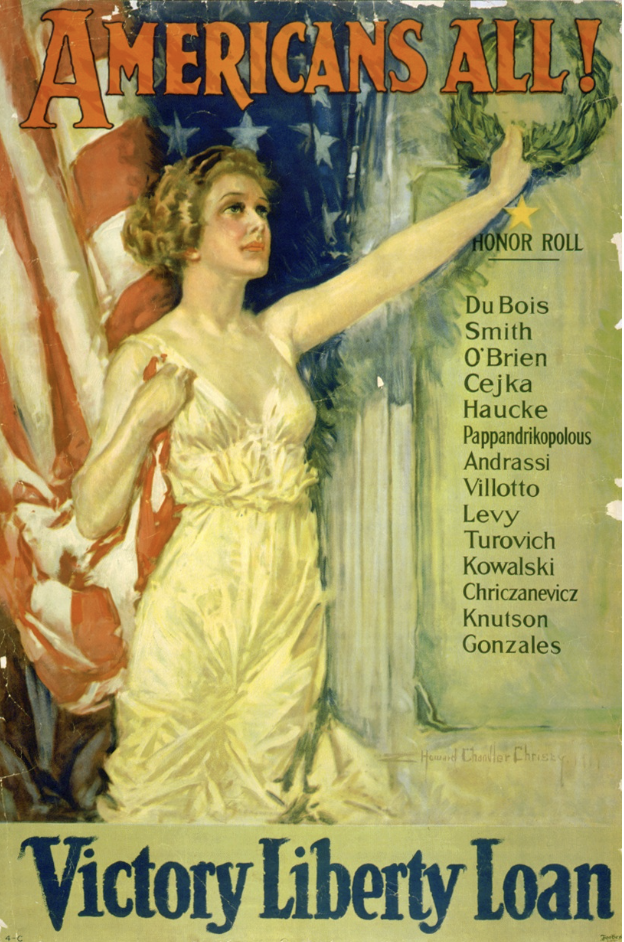
As reported in the October 19, 1918, Irvington Gazette, at a Liberty Bond rally held in Ardsley at the school auditorium, Mr. Lewisohn, who was the first to address the audience (who had arrived there after singing patriotic songs in the village square, now Addyman Square), emphasized the necessity of oversubscribing the current loan and pledged to duplicate any sum raised in Ardsley during the last week of the campaign. Paradoxically, Lewisohn was a member of the New York Peace Society (headed by Andrew Carnegie, the Scottish-born industrialist whose steel empire helped build modern America and whose vast philanthropy funded thousands of public libraries), an organization with deep roots in American history, which generally adopted an antipathy toward war as a means of resolving disputes and which had been recently revived as a result of the Spanish-American War (1898) and the subsequent Philippine-American War (1899-1902).
However, as the America First Committee folded within days of Pearl Harbor and pledged support to a war which it had tried desperately to prevent, the New York Peace Society, after April 1917, redirected itself from neutrality to loyal prosecution of a “war for peace” against German autocracy. As reported in The New York Times, in an April 15, 1917, article entitled “No Room for Pacifists,” Charles Levermore, the Society’s secretary, a leading academic and peace activist, observed that once “the hour for action is struck,” and “the judgment of our democracy is clearly expressed,” “there should now be but one voice… one loyalty.”
🏫 🏫 🏫
The venue where Lewisohn spoke in favor of buying Liberty Bonds was the new Ardsley High School on Ashford Avenue, erected in 1912. When Ardsley High School first opened its doors, its original seal featured a hand-crafted torch amid laurel leaves and the Latin motto "Amici usque adoras" (likely meant to be "Amici usque ad aras," or "friends as far as the altars" which in its classical understanding meant a friendship up to the point where higher oaths come into play, altars being where oaths are taken). A mosaic of the seal, crafted by Ardsley High School Class of 1969 alumna Kathy Donoghue, still graces the present high school’s entrance on Farm Road (where Lewisohn’s 40-room mansion once stood), making the seal a cornerstone of Ardsley's history.
The phrase marks the altar as the decisive boundary where friendship and prior loyalties yield to a higher oath or national duty. It is worth pausing on the setting. The auditorium where Lewisohn rose to speak that October evening in 1918 was in the very building where the school’s motto was likely displayed. Whether anyone in the room that night thought about the inscription on the school seal is unknown, but the phrase could not have found a more fitting moment. For Lewisohn, a German-born member of the Peace Society who now pledged to match whatever Ardsley raised for the war effort, his altar moment of siding with America against Germany had arrived. Old origins, venerable loyalties, and time-honored ideals – all yielded to the higher obligation of his adopted country. The motto described exactly what he did. In that sense, Lewisohn’s pledge in the Ashford Avenue auditorium is not just a footnote in a bond drive; it is the moment when the District’s new motto stepped out of the seal and into a life actually lived.
🚣 🚣 🚣
As Arthur Silliman recounts in his three-volume informal history of Ardsley, life for school children in the years before 1912 had a distinctly Tom Sawyeresque quality – pastoral, mischievous, and marked by the avoidance of authority:
“Prior to 1912, education in Ardsley ended with Grade 8. Pupils ambitious for more education could go to Hastings-on-Hudson High School. The Ardsley Board of Education paid the tuition but presumably pupils furnished their own transportation, usually taking the Putnam R.R. to Mount Hope and walking across to the Hastings H.S. On good days, the boys sometimes walked the entire distance, dawdling along the Saw Mill River with its cool, inviting pools, screened with overhanging willows, ideal for fishing and skinny dipping. Some of our older citizens may recall dodging the “truant officer” to engage in such “outdoor education” activities. They might get away from the earlier minion, nicknamed “Grasshopper,” but never from the redoubtable Tom Eaton who was also Chief of Police; indeed for a time, the entire police force.”[1]
For the new Ardsley High School, considered a regional showcase in its time, the selection of a Latin motto for its seal was no accident. Latin mottos were a deliberate act of institutional legitimacy – borrowed from the classical tradition of universities and elite academies. They signaled that the new public high school was a serious academic enterprise and that the community, by making this large investment, was announcing to the world Ardsley had outgrown its small-town character as just another village on the Saw Mill River and was ready to take the next step in reimagining its identity.
🏛️ 🏛️ 🏛️
Probably unknown at the time, the provenance of the chosen phrase has roots stretching back over two millennia to ancient Greece, to a saying attributed to Pericles, the great statesman of ancient Athens, who used it to define the limits of loyalty rather than its absolute devotion. The phrase coursed through centuries of Latin scholarship, was embraced by Dutch Renaissance scholar and humanist Erasmus, and later appropriated by Yale University for its alma mater, and along the way its meaning quietly inverted, so that what began as a caution became a declaration of undying friendship. As G. L. Hendrickson of Yale University documented in his essay "Amici Usque Ad Aras," even serious classical scholars spent years puzzling over its recondite origins and intent, making Ardsley's apparent misspelling of ad aras as adoras hardly out of step with the phrase's long history of being misread, and phonetically the two words are close enough that the error was as easy to make as it was to overlook.[2]
A few years ago, after minimal consultation with the broader community, the historic seal was reduced to a mere emblem of athletics. A seal is a formal emblem for official documents like diplomas, while a mascot is a simplified athletic logo for games and spirit wear. Before the construction of the present high school on Farm Road in 1958, Ardsley's sports teams were unbranded. As explained by Ardsley High School Class of 1952 member Beth Wallach (nee Kakerbeck) back then, at sporting events, they were simply known as “Ardsley.” It was only in 1956 that the image of the panther first appeared on the cover of the Ardsleyan, the school yearbook.
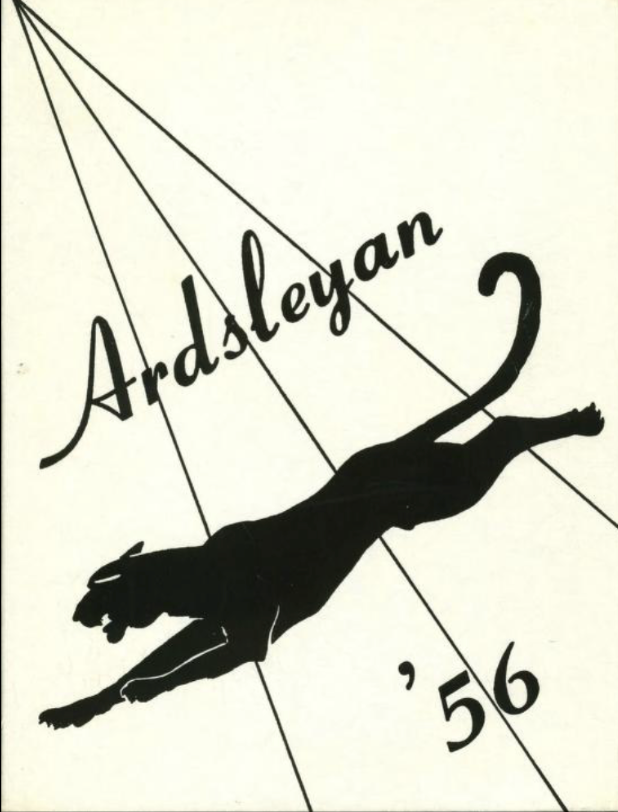
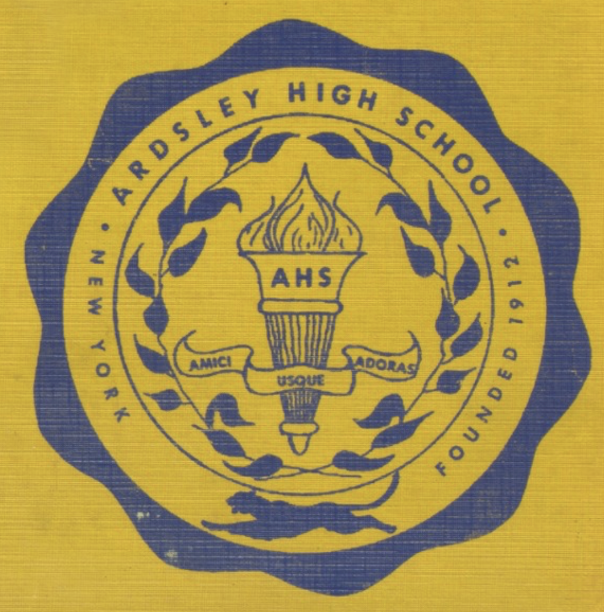
From 1964’s Ardsleyan Yearbook - the merging of the symbols of the two identities of Ardsley High School
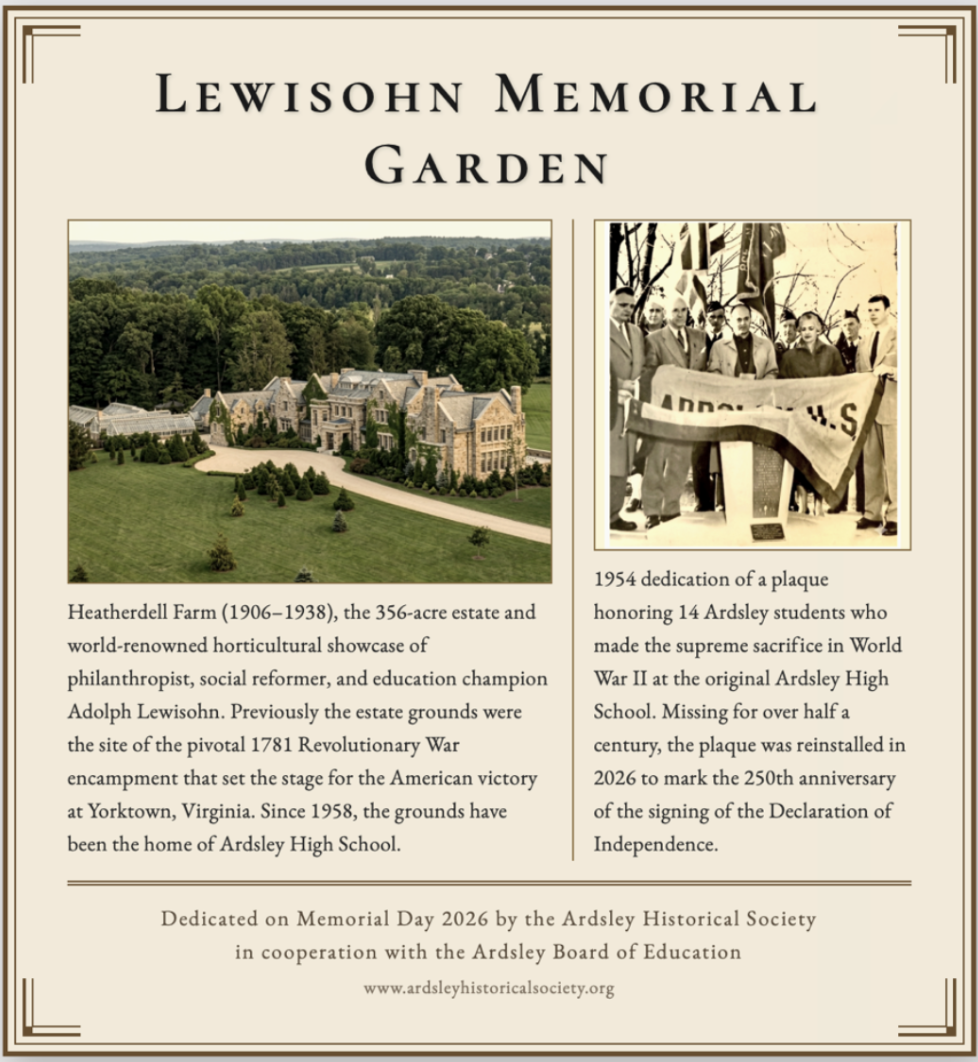
Parenthetically, as noted in an August 20, 1958 article in the Reporter Dispatch (the predecessor to The Journal News), even before the new building was opened, it was already slated to receive an extension for 16 additional rooms due to the District’s rapidly expanding enrollment. Notably, the building was scheduled to be named for its long-time Superintendent Arthur W. Silliman, who was a nationally known pioneer in outdoor education. [3] However, when it opened, it was named Ardsley High School. In 2026, Ardsley High School is once again being transformed: a new state‑of‑the‑art track and football field are being built, a new wing of classrooms and labs is rising at the rear, and the front entrance is being reconfigured and enlarged for enhanced safety. Also in 2026, the high school grounds will welcome the Lewisohn Memorial Garden, whose centerpiece will be a long-lost plaque honoring the 14 former Ardsley High School students who made the supreme sacrifice in World War II. Beth Wallach’s brother, Lieutenant Robert Kakerbeck, a 21-year-old fighter pilot, who died in plane crash on a training mission in England two days before the June 6, 1944 D-Day landing in Normandy and who is buried in the Cambridge (UK) American cemetery, is one of the fallen fourteen whose name appears on the plaque.
Why this particular type of big cat or cougar was selected is unknown (a search of the Board of Education minutes from that period is silent on the issue, and Silliman’s history doesn't mention it either), but it was undoubtedly due to its reputation for strength, speed, and ferocity. After Eagles, Tigers, and Bulldogs, Panthers are among the most frequent mascots for high school teams in the United States. Notably, neighboring Edgemont, which built its high school in the 1950s, is also known as the Panthers. Perhaps, as the decades-long identification of Ardsley as “the home of the Panthers” remained unchanged, the revision of the century-old school seal was likely either overlooked or regarded as a natural evolution toward a more sports-oriented identity.
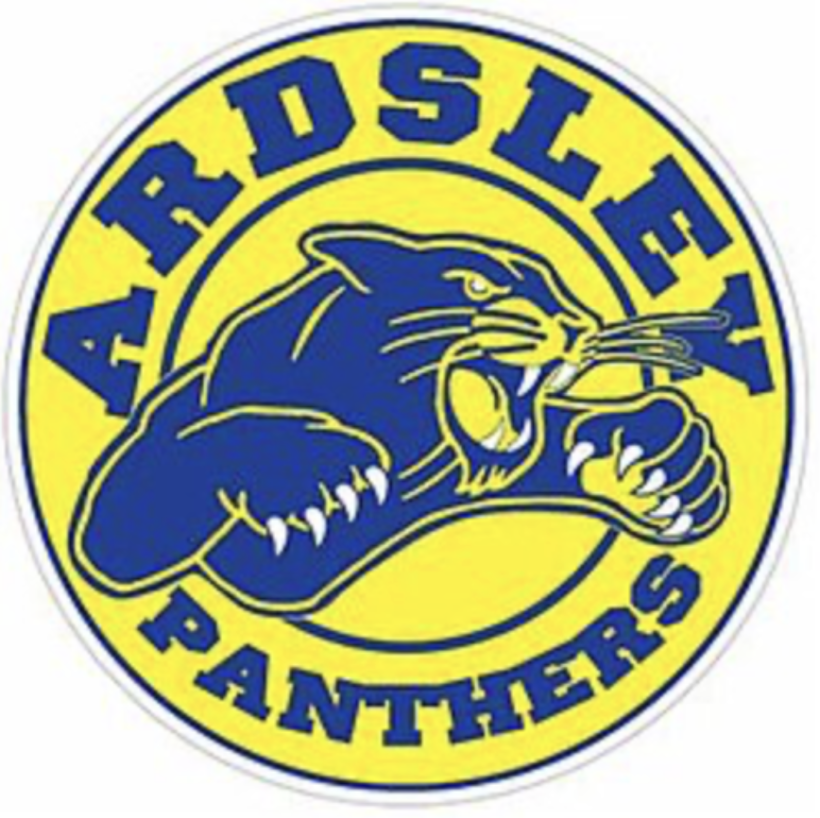
The above image is the only that appears on Ardsley High School’s Wikipedia page
In the process, however, the 1912 hand-crafted imagery was exchanged for computer-generated clip art, and the once central torch (a symbol of knowledge for millennia) was unceremoniously overshadowed by an uninspired stodgy, collegiate letter A, that arguably clashes with the circular seal around it. On balance, the two images look like they were never designed to co-exist; neither complements the other. Meanwhile, the Latin motto (and the year 1912) have been removed, and the mascot is no longer distinctive to the High School.
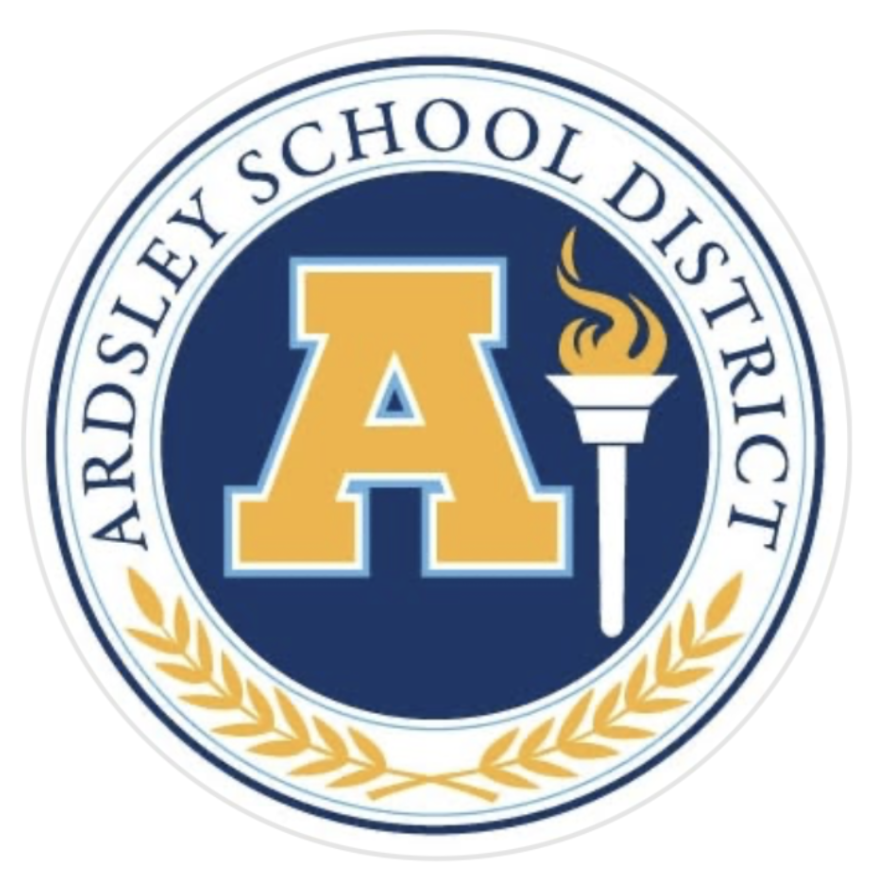
In a culture where athletics and their attendant branding carry enormous weight, it is easy for a formal emblem of institutional history to be subordinated to imagery that seems to better match the dominant language of American school spirit, and for athletic branding to overshadow older indicators of academics as the preeminent symbol of an educational institution. Steven J. Overman, a retired professor of health and physical education at Jackson State University, argues that in many American schools, sports culture and its symbols have come to dominate the institutional landscape, eclipsing academic life and traditional emblems of learning. In Ardsley, the quiet demotion of a seal bearing amici usque ad aras to make room for a more marketable panther is one small local instance of the same exchange Overman describes: a world in which the symbols of learning yield to the symbols of brand and swagger. [4]
Scholars who study school mascots have largely focused on the harmful effects of Native American imagery, showing that such mascots can damage Native students’ self-esteem and reinforce stereotypes among non-Native peers. They also examine how mascots shape community identity, sometimes linked to local industry, as with the Pittsburgh Steelers, and how efforts to retire mascots can create a “belonging gap,” where attachment to the old symbol becomes a way of defending existing social hierarchies. In New York, a statewide ban on Indigenous mascots adopted by the Board of Regents has pushed dozens of districts to rebrand, but its long-term viability remains in doubt, as it has faced significant legal pushback from some school districts and sharp criticism from the United States Department of Education (or what is left of it) as discriminatory under federal civil rights law.
That impulse is hardly limited to schools: numerous lifelong New Yorkers remain adamant that the Mario Cuomo Bridge will eternally be the Tappan Zee, a conviction that has prompted several quixotic legislative efforts to restore the bridge to its original name, and longtime residents of the Village of Sleepy Hollow can be seen wearing shirts declaring that, to them, it will always be “North Tarrytown.”
Even more recently, the wholesale jettisoning of the Village of Ardsley’s forty-year-old logo created a public outcry, echoing many of the same criticisms directed at the new high school mascot as sterile, generic, and detached from the Village’s 125-year history. The recent controversy over Ardsley’s revised logo was not an isolated event. In connection with the 100th anniversary of the village’s 1896 incorporation, a special centennial logo bearing the tagline “100 Years of Village Life” was adopted for the 1996 celebration year.
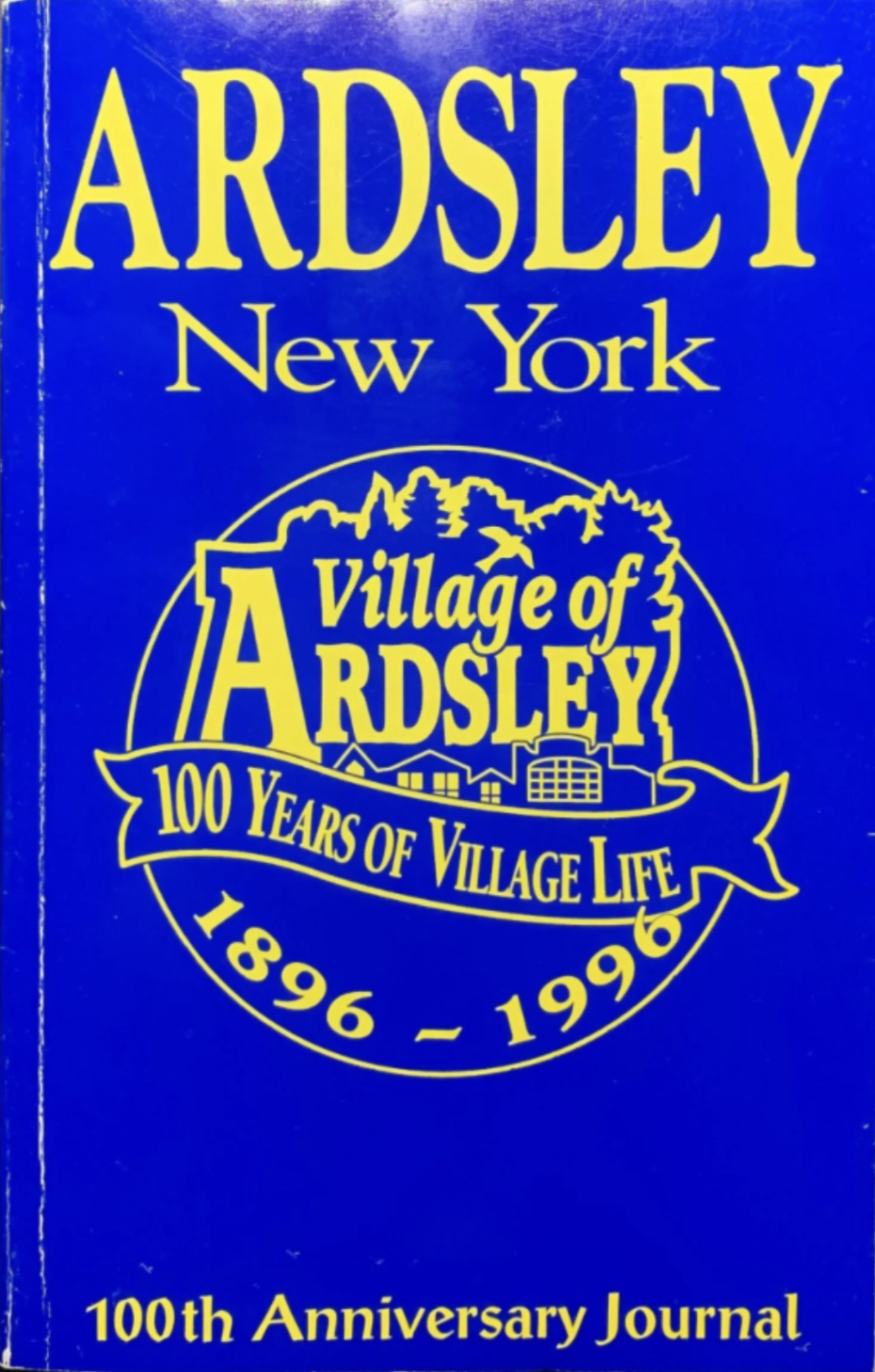
As former Village Manager George Calvi recalled, even that temporary emblem generated resistance from residents attached to the familiar design, an early glimpse of the same sensitivities about visual identity that resurfaced decades later when the long-standing Village of Ardsley logo created by Ardsleyan Anthony Giaccio, Sr., a professional graphic artist, decorated World War II veteran, and father of six with deep roots in the Ardsley community, was replaced outright. Calvi noted that a year or two after the centennial, sentiment was building from residents and Village Board members alike that “the centennial festivities are behind us now, let us go back to the old logo. And we did.” (G. Calvi, personal communication, March 26, 2026)
The enduring importance of logos or community symbols or the subordination of academic emblems to athletic ones is not simply an Ardsley story. Across Westchester, school-based mascots have become the primary currency of suburban identity, most visibly on the rear windows of cars – the Panthers, the Broncos (Bronxville), the Raiders (Scarsdale), the Trojans (Blind Brook), and the Pelicans (Pelham), all displayed as shorthand for community pride and, implicitly, social standing. The phenomenon is not evenly distributed. In the county's more affluent and higher-ranked districts, these decals are ubiquitous; in lower-ranked districts, they are conspicuously absent. What began as a symbol of school spirit has quietly become something closer to a status marker, a way of announcing not just where your children go to school, but what kind of place you live in, a burden a seal never carried.
In his 1923 poem “Nothing Gold Can Stay,” Robert Frost, whose poetry revolved around fleeting beauty, rural life, and the passage of time, and well known to students for poems like “Stopping by Woods on a Snowy Evening,” wrote that what begins in its finest and most original form is always the hardest to retain. [5] The boys who dawdled along the Saw Mill River on their way to Hastings did not know they were living the last years of a small-town Ardsley that would vanish within a generation. Lewisohn could not have known, as he stepped to the podium, that the school whose auditorium embodied his community's highest aspirations in 1912 would one day be relocated to the land where his mansion once stood - one of the quirky events that history arranges. And those who quietly replaced the 1912 school seal or the Village of Ardsley’s logo almost certainly did not think of themselves as erasing anything but instead just updating, modernizing, and moving on.
English novelist and poet Thomas Hardy in his poem "The Self-Unseeing," written late in his life when he returned to the Dorset cottage where he had grown up, understood how this happens.[6] Standing in the same room where his mother had once danced, and his father had played the fiddle, he realized that at the time – when the fire was burning and the music was playing, and everything was alive around him – none of them had understood what they had. They were inside the moment so completely that they could not see it for what it was. "Everything glowed with a gleam," he wrote, "yet we were looking away."
The seal is still there, ensconced in the mosaic just inside the school’s main Farm Road entrance. Kathy Donoghue put it there in 1969, and there it remains – torch, laurel leaves, and a Latin motto that traveled from ancient Athens to Erasmus to Yale before landing, slightly misspelled, in a small village on the Saw Mill River. Most students stroll past it every day without affording it a second glance. This indifference is hardly a flaw. It is simply what Hardy meant.
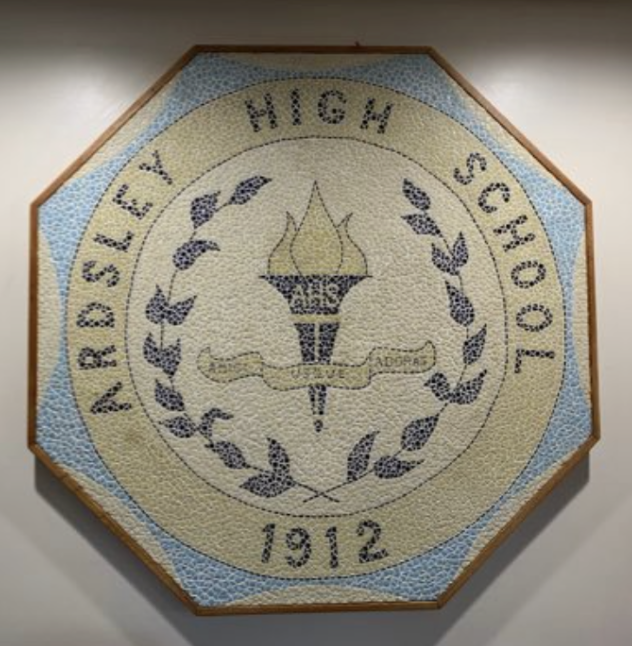
Kathy Donoghue’s Mosaic
Endnotes:
[1] Silliman, A. W. (1976). A short, informal history of Ardsley, N.Y. (Vols. 1--3). Internet Archive. https://archive.org/details/shortinformalhis01arth
[2] Hendrickson, G. L. (1950). Amici usque ad Aras. The Classical Journal, 45(8), 395–397. http://www.jstor.org/stable/3293026
[3] https://www.ardsleyhistoricalsociety.org/the-timepiece/natures-classroom
[4] Overman, S. J. (2019). Sports crazy: How sports are sabotaging American schools. University Press of Mississippi. (Overman argues that yearbooks, rituals of school spirit, and public recognition overwhelmingly center on athletes and mascots, and he urges schools to restore a healthier balance that honors scholars and academic symbols alongside athletics)
[5] Frost, R. (1923). Nothing gold can stay. New Hampshire. Henry Holt and Company. https://www.poetryfoundation.org/poems/148652/nothing-gold-can-stay-5c095cc5ab679
[6] Hardy, T. (1901). The self-unseeing. Poems of the Past and the Present. Harper & Brothers. https://www.poetryfoundation.org/poems/52313/the-self-unseeing